Tuesday, September 04, 2018

BISHOP RENNIS VISITS BOLIVIA

- Making History- 

Several years ago Bp Rennis Ponniah (Diocesan Bishop of Singapore) his wife Amir and their son Abraham visited Bolivia. We enjoyed having them and here is +Rennis giving a talk to the leaders of Cristo Luz Del Mundo. +Rennis and I share a common racial heritage, in that we're both Tamils.

I translated his message into Spanish.

It's likely we were making history: two Tamils ministering in South America - one speaking in English and the other translating in Spanish!


+ Rennis lived up to his calling as an effective bible expositor at a special weekday night meeting. The Lord's people were blessed by his powerful message on the " Risen Christ's Presence On Road to Emmaus".   

We grew up in the parish of Christ Church and also attended the same mission school in Singapore.

Friday, December 30, 2016

ELIJAH n HIS ANCIENT DESK TOP

SPOT - OUR BELOVED DOG 

BROWNIE - OUR BELOVED DOG

ELIJAH AND MICHELLE 
BLAST FROM THE PAST - the early years of 2000 -
ELIJAH 

THE FAMILY 
   

Sunday, December 04, 2016

THE EARLY YEARS

THE EARLY YEARS! - STUDYING THE LANGUAGE

This is a photo of Michelle, Elijah and I in Cochabamba in 1993. We studied Spanish, linguistics and cross-cultural communication in the Language Insitute run by the Maryknoll Fathers. It's a Roman Catholic institute, open to anyone wishing to learn Spanish and the main native languages of Bolivia highlands, Quechua and Aymara. Michelle and I took turns to attend classes at the institute. If she went in the morning, I would look after Elijah; and vice versa.

I miss the innocence of the early days

Thursday, November 24, 2016


UNCLE EDWIN'S WEDDING


This is a photo of my uncle Edwin's marriage to my aunt Emily. My uncle, a warrant officer, was a shipwright in the Royal Malaysian Navy. She was a nurse, a matron in the government hospital. They were very much in love.

Uncle Edwin passed away several years ago. They have 2 sons, Christopher and Michael; and a daughter, Angeline.

I am on my uncle Edwin's left. He helped me arrange my tie before we went to the church for the church service.

On aunty Emily's left is my sister Rebecca. My father and mother are behind the newly weds.

My uncle Edwin was my mother's younger brother. He and aunty Emily were married in Johore Bahru, Malaysia.


Friday, November 18, 2016

GOING TO BOLIVIA 20

GOING TO BOLIVIA 20  

EPILOGUE - ADIOS!

This series entitled "GOING TO BOLIVIA" comes to an end with this post.

I began to share my story of the circumstances from 1991 of my call to serve in Bolivia in June 2007 and have only now in 2016 brought that part of my story to a close in the previous post, "Going to Bolivia 19".

Perhaps I should start on a new series of posts which relate my experiences from 1993 onwards? We shall see.


THE END AND A NEW BEGINNING

The post "GOING TO BOLIVIA 19" ended on our safe arrival in 1993 January in Santa Cruz, Bolivia. It signaled the end of my ministry in Asia and the beginning of a leap into the unknown in South America. It has taken me nearly 9 years to put together a series of events which covered a three year period from 1991 to 1993.

I am tempted to redo these posts with a fresh perspective, in the form of a book. Much has happened since 1993 which has given me a deeper understanding of our journey.

Michelle and I didn't plan for a long-term missionary service in Bolivia.  Ironically we've been in Bolivia now for more than 20 years! During this period the Lord's done some awesome stuff. We've seen him transform families and individuals. He's raised a fledgling national leadership to replace missionaries and it has also been a joy to witness the growth of the church.

On a personal level, it would be disingenuous for me to say its been easy for us in Bolivia. No. Our families have paid a price. For instance, we were not there for our parents when they needed us and not being there during their funerals was difficult. The distance between Singapore and Bolivia made it impossible for us to hop on a plane and return to Singapore. The Lord has been faithful and good to our loved ones in the midst of our trials and disappointments.

TIME TO LEAVE?

Yes, there have been moments when the time to leave Bolivia and return to Singapore had finally arrived. And 2007 appeared to be the right moment to move on. A local clergy, whom I had worked with and trained, took my place, as Pastor of the church. It seemed right to return to Singapore, for good. Michelle and I planned to return to Singapore for a 2 year period in 2007 with the aim of providing support for our son, Elijah's endeavor to fulfill his National Service obligations.

We hosted someone who encouraged us to consider returning to Bolivia after our stint in Singapore. John Sutton, the then Secretary General of SAMS UK, visited us in Santa Cruz a few months before my departure. He told us of the dire need for experienced missionaries to help guide the new pastors and the national leadership. He made a convincing case.

We prayed about the matter and Michelle, my wife, and I felt the Lord's peace to return to Bolivia, after our stint in Singapore. She has a heart for the Bolivian people and John's appeal for us to help raise a mature national leadership made sense. And so we returned in November 2009.

May the Lord grant us the grace to humble ourselves and to seek His glory in all our decisions.

¡He is faithful and trustworthy!

Wednesday, November 16, 2016

GOING TO BOLIVIA 19

GOING TO BOLIVIA 19

FLYING TO BOLIVIA!

After the exploratory trip to Bolivia in 1991, we had to wait for a year and a half before all the details of the mission to serve in Bolivia were confirmed. Michelle and I began to prepare for the trip and made plans for the task of living in a foreign country.

I had to get the relevant travel documents: innoculations against yellow fever as well as a good conduct certificate from the Singapore Police. The plan was for us to leave Singapore in November 1992, spend a month with my sister, Rebecca and her husband Jim in the US. We would then subsequently leave for Cochabamba, a city in the Bolivian valley, where Michelle and I were due to start language and inculturation classes from January 1993 for 6 months.     

PROBLEM WITH THE VISA 

My application for a visa for the family was a test on my nerves and patience. I had already sent our visa applications to the Bolivian embassy in Japan in the beginning of 1992. We were told by the staff in Japan that it would take some time for the application to be processed. And so we waited. I felt uncomfortable after not receiving any news from the Bolivian embassy concerning my visa application. And so I rang the embassy in Japan. My discomfort was justified. They had lost the applications for our visas! There was no time to redo the applications and send them to Japan. Also I had lost confidence in the embassy staff. There was no guarantee that they would issue us a visa before our projected departure for the US and Bolivia.   

I immediately rang up the Rev Simon Thomas, the national director of the Bolivian Church and explained to him my predicament. He told me he would help us get a visa in Bolivia. We were a month away from our planned trip and we had no visas. I toyed with the idea of getting a visa on my arrival from the immigration authorities at the Bolivian airport. Bishop Moses Tay vetoed the idea because of the possibility of getting stranded. In the midst of this mini crisis. Simon faxed me a document which gave me permission to enter Bolivia. It did not look like a visa, but Bishop Moses was satisfied.  

BOLIVIA HERE WE COME!

So we left Spore toward the end of November 1992 and embarked on a journey which would forever change our lives. We spent a month with my sister, and her husband in Fullerton, Southern California. The flight was insanely long and we needed a week to recover from the jet lag. I had a chance to do some readings on mission at Biola University and visited a few anglican churches. In the beginning of January 1993, we packed our bags in anticipation of our trip to Bolivia. At the LA airport we said goodbye to our generous hosts, Rebecca and Jim, and boarded the flight to Santa Cruz, Bolivia. 

The plane landed safely in the afternoon of 5th January 1993. I remember the anxious look on my wife's face as she peered at the Viru Viru airport in Santa Cruz, Bolivia, through the window of the American Airline plane. Elijah was only 3 years old and he looked excited as the plane came to a stop. Compared to the airports in Changi and LA, the facilities at Viru Viru was rudimentary. We had no problems with immigration and picked up our bags from the belt. 

We were met at the airport by Rev Simon Thomas and his 5 year old daughter Megan. She gave us a big hug and welcomed us with a big smile. We were very tired but happy! It was great to finally meet up with Simon. He took us to his house where we stayed for 5 days.after which we flew to Cochabamba to do our language and inculturation studies.          
It was unbelievable! We had finally made it to Bolivia. It was a relatively long wait. The process to serve in Bolivia began in mid 1991 and here we were in January 1993.  
                

Monday, March 21, 2016

YOUNG BOY

This photo was taken in May 1966. I was 9 years old, and studying in  primary 3 at Anglo Chinese School in Coleman Street. My family and I were living in Lorong Lalat, Jalan Besar

Wednesday, January 21, 2015

REMEMBERING MY 
PARENTS

Joy of Reading!

My father, JWD Samuel and my mother, Ruby Samuel occupy a special place in my heart. 

They've both passed on to glory but they gave us, their 4 children, Rachel, Reuben, Rebecca and Raphael, the joy of reading. 

My father was a voracious reader and so was my mother. Dad used to concentrate and read under the bright lamp in his room. Mum read in the hall. The arrival of TV changed their reading habits but they still maintained their love for the written word.   

 My parents introduced us to different worlds by inculcating in us a love for reading. Dad gave us the newspapers every morning and reading the daily news helped me to discover politics and sports. He also subscribed to magazines which dealt with socio-political issues, both international and and regional. Mum in buying comics, mostly DC, for us once month at a 2nd hand book shop helped us discover fantasy and adventure. She also, more importantly, bought and gave me my first bible when I was 15 years old.

The photo was probably taken in the 1960's

Friday, January 16, 2015

GOING TO BOLIVIA 18


¡IMPASSE IN SINGAPORE!

Michelle and Elijah were a welcome sight after not seeing them for more than 2 weeks. 

Michelle listened to my stories concerning the trip and my descriptions of the place with great interest. I remember commenting on the similarity between Bolivia and parts of Malaysia as I tried to help her picture Bolivia. She had never been to that part of the world and was anxious to know about the conditions and the medical facilities available. 

By God's grace we go to know an  Australian missionary couple in Singapore, Patrick and Wendy Marman, who had served in Bolivia. The Marmans were teaching at the Discipleship Training Centre and gave us some valuable tips and information concering life in Bolivia.  

NEED FOR CLARITY

Bishop Moses and I had left South America with a sense of ambiguity in 1991. There was an expectation on the part of the Bolivian church for me to serve at a congregation in La Paz, a city in the highlands of Bolivia. I was however convinced that I was called to serve in Santa Cruz, a bustling city in the lowlands. The other hurdle was to agree to a condition of the Bolivian church to serve 2 terms of 6 years in Bolivia. I could not see a commitment beyond 2 years. 3 appeared to be bearable but a 6 year commitment was not within our radar screen. We had to pray and seek assurance of the Lord's leading in moving forward. Bishop Moses although keen on us to commit ourselves for 6 years, spoke to me about the importance of having peace in our hearts as steps of faith are taken.   

There did not appear to be a way through this impasse until my wife Michelle shared with me her insight concering our future. She suggested we commit ourselves to a term of 3 years with a promise of doing another term of 3 years if the Lord were to lead us in this direction. We sent a letter to Bishops and Moses and  Winstanley with our proposal. After a few months of deliberation the Bolivian standing committee accepted our proposal. We received a letter from the Peruvian - Bolivian church in my mail box, stating their acceptance.  We were overjoyed!    

CHURCH I WAS PASTORING 

The question of finding a pastor to replace me in All Saints english congregation needed to be looked into. Till then, I was their longest serving pastor and was concerned for them to have a pastor beforeI left for South America.  This was the prerogative of Bp Moses Tay and he appointed Rev Henry Seow from Holy Trinity english congregation to replace me. Henry was fellow seminarian at St Peter's Hall where we trained for ministry. I was happy with the Bishop's appointment because of the fit between Henry and the congregation. Henry however felt he was not ready to move and wanted more time to work with the congregation at Holy Trinity.  Wthin a month of his appoinment he resigned and felt called to lead a new work in a non anglican setting. This difficult situation however was resolved when Rev Rennis Ponniah was appointed the Pastor a few months later. Rennis was a very active layman in the congregation and his presence had a calming influence on the congregation.        

Wednesday, January 15, 2014

GOING TO BOLIVIA 17

1991 EXPLORATORY TRIP TO PERU & BOLIVIA - Part 6

Bishop Moses, Cynthia and I bade farewell to our new friends in Santa Cruz. 

We returned to La Paz and shared our impressions and thoughts of Santa Cruz with Greg Blaxland and his wife Judy. Greg was  disappointed at our decision to explore ministry opportunities in Santa Cruz instead of La Paz; he was planning to leave the work in La Paz, Bolivia in early 1992 and was hoping that I would take his place as Pastor of the congregation. This is an important issue in the mission field. Almost all responsible missionaries pray and hope for a replacement who can carry on the work.  And Greg was keen on leaving the church in the hands of a pastor from a diocese, before his departure. 

We were glad that our trip to Bolivia was coming to an end. The weather, the altitude sickness, the hectic schedule together with long energy sapping flights had taken its toll, on all of us, especially Cynthia. Bp Moses, the most seasoned traveller among us, always looked alert and fresh. I was beginning to miss Michelle and my 2 year old son, Elijah.

We left Bolivia and Peru on a happy note after having met up with our Bolivian brethren and missionaries from SAMS. Till this trip I had vague ideas about South America and most of my knowledge concerning the continent came from books and movies. 

We left Bolivia for Peru, on the 23rd Octobre to meet up with Bishop Alan Winstanley in Lima, the capital of Peru. The Anglican Church in Bolivia was under the purview of the diocese of Peru. He gave us a quizzical look on hearing of our interest in Santa Cruz and did not appear to be thrilled about the possibility of my wanting to serve in Santa Cruz. He was also godly enough to not react negatively but to be open to the Lord's guidance. 

He explained the necesity for a long term commitment in the field because of the need to inculturate oneself and to also have a good grasp of the language. He was therefore adamant about missionaries doing at least a 2 year term of 6 years! At that point I could only see us serving a term of 2 to 3 years. It was quite apparent that we had reached an impasse. We all decided to pray through the questions concerning future: would the Bolivian church acquiese to our request and invite me to begin ministry in Santa Cruz instead of La Paz? Would they allow me to serve for a period of 2 to 3 years? I remember Bishop Alan saying something to the effect that the Bolivian Church's standing committee would have to discuss our proposals. 

The idea for the Diocese of Singapore to invest in Santa Cruz instead of La Paz was unexpected on the part of the Bolivian/Peruvian leadership. Clearly, from a human standpoint, the urgent need for missionaries was not in Santa Cruz but in La Paz. We had to discover God's will in this maze and to not force issues.  We decided to pray for clarity in this cloudy situation, and avoid hasty decisions. I was also struggling with my weakness in languages: learning to minister in a new language (Spanish) was going to be a huge challenge.

And so our 2 week trip to Bolivia and Peru had come to an end. It was a tiring but rewarding experience.  The fatigue from the past 2 weeks had taken its toll and we spent the major part of our journey catching up on lost sleep. I was personally looking forward to seeing my family as the plane landed in Changi Airport.      

Tuesday, January 07, 2014

GOING TO BOLIVIA 16


1991 EXPLORATORY TRIP TO PERU & BOLIVIA - Part 5

This post, is part 5 of the 12th post in an ongoing series GOING TO BOLIVIA where I relate the circumstances surrounding my response to the Lord's call to serve Him in Bolivia. The 12th post in this series is significant because it tells the story of my first visit to Bolivia with Bishop Moses Tay and his wife Cynthia.


So here I was in Santa Cruz, Bolivia in 1991.

I spent most of the morning and afternoon with missionaries in Santa Cruz.

My suitability to serve in Bolivia was tested in interviews and meetings with the missionaries, Sue Woodcock and Ernesto/Denise Obregon who were serving at the Anglican Church in Santa Cruz. The first question Sue Woodcock asked me was if Michelle was supportive of my willingness to uproot ourselves and come to Latin America. I replied in the affirmative. The question was important, I found out later, because the rigors of inculturation normally brought to surface unresolved issues in marriages. Sue Woodcock was a no nonsense silver haired lady. She was single, disciplined, persisent and a good bible study leader. She used to serve in Uganda before she came to Bolivia, and was recently serving in Spain before she passed away from cancer. I managed to speak to her a few days before she passed away.

Ernesto Obregon and his wife Denise were a fun loving couple and complemented Sue Woodcock. Their daughters were pre-teens. Ernesto was an anglican from a pentecostal background. He liked traditional liturgy and was trying to bring in more elements from the church's tradition in the church he was pastoring. Denise, his wife had an effective ministry with the young people.

The highlight of the visit was the opportunity to visit the small YWAM base in the grounds of the Anglican Church. David Hulford, an anglican,  was the leader of the base. We sort of interrupted a lesson  on the 10/40 as we walked into the church grounds while the lesson was on. Our arrival was timely because of Spore's location near the the window. It was here that I saw the bilateral missionary connection between Asia, Latin America and back to Asia. To some extent this has already been fulfilled as Latin American missionaries are already making an impact in Asia. The Bolivian church have already sent missionaries to India.            

At night in the house of one of the local lay leaders Bishop Moses Tay taught the scriptures and shared testimonies from the church in Singapore with the local Bolivian leadership and the missionaries. I felt at home and was happy to mingle and to get to know some of the Bolivians. I had translators to help me out as I listened to Bolivians share their stories of conversions and daily walk with the Lord.  

We returned to La Paz the next day after spending a night in Santa Cruz.

Saturday, January 04, 2014

ST PATRICK & BOLIVIA

My introduction to the Irish was through some of their cultural icons: James Ussher, Edmund Burke,  U2, Van Morrison, Rory Gallagher, George Best, Liam Brady etc.  My experience in Bolivia has helped me appreciate the Irish people even more, especially with reference to St Patrick.    

Several years ago in a visit to Ireland (thanks to an invitation extended by SAMS Ireland and SAMS GB) I found similarities between the Irish and Bolivians. At their best, there is a charm - a happy go lucky spirit and a sense of fun which characterizes both cultures. Perhaps it comes from their common experience of being surrounded by larger nations with an imposing agenda. In Santa Cruz, Bolivia we have 2 Irish bars and restaurants.   

And I also discovered the relevance of St Patrick to the Bolivian Anglican Church.  Hence I have chosen to mark the Bolivian Beat with Patrick's Cross.  

Patrick was a missionary bishop with a heart for the people whom he served. The work in Bolivia requires missionary workers and a national leadership (including bishops!) with a deep love for the people they serve - a willingness to honor to not only the culture but to also understand and help Bolivian people realize their aspirations. The sensibility of identifying with the tragedy and the triumphs of the Bolivian narrative is also an imperiative.  Patrick embodied these missionary values.       

During my trip to Ireland I visited St Patrick's cathedral in Armagh and saw the place where he is purportedly buried. Patrick's life story at times resembles a movie or a TV series. I lifted these paragraphs from a website (http://www.biography.com/people/st-patrick-9434729): 

 When St. Patrick was 16 years old, he was captured by Irish pirates. They brought him to Ireland where he was sold into slavery in Dalriada. There, his job was to tend sheep. Saint Patrick's master, Milchu, was a high priest of Druidism, a Pagan sect that ruled religious influence over Ireland at the time. 

St. Patrick came to view his enslavement as God's test of his faith. During his six years of captivity, he became deeply devoted to Christianity through constant prayer. In a vision, he saw the children of Pagan Ireland reaching out their hands to him. With this, he grew increasingly determined to free the Irish from Druidism by converting them to Christianity.


His sacrifice, simplicity and power pervades the atmosphere of the Cathedral in Armagh which bears his name.  

Patrick was a reputed evangelist who prayed for the sick, cast out demons and who taught God's Word. No, he was not a cessationist. He used the 3 clovered shamrock flower to communicate the truth of the three persons of the Trinity ¡Legend has it that he emptied Ireland of its snakes! Here is another quote describing his work:

 Upon his arrival in Ireland, St. Patrick was initially met with hostile resistance. But St. Patrick quickly managed to spread Christian teachings far and wide. Through preaching, writing and performing countless baptisms, he convinced Pagan Druids that they were worshiping idols under a belief system that kept them enslaved. By accepting Christianity, he told them, they would be elevated to "the people of the Lord and the sons of God."

The Cathedral of St Patrick, the centre of the Church of Ireland, is not imposing but a testimony to the man's practicality and effectiveness.  He raised a community of monks, and the Cathedral we see today in Armagh was built around this monastic community, during the 5 century. It is very likely that monks were trained to spread the gospel, build disciples and to recieve the needy. A strong sense of community in Christ Jesus will always reach out to the lost. 

One cannot but sense the sacredness of Patrick's inspiration in the Cathedral sanctuary and grounds -  death has not silenced his message and testimony of Christ, to the world.

May the Lord grant us grace to learn from Patrick's example
!

Thursday, May 16, 2013

CONSECRATION OF FIRST ASIAN ANGLICAN BISHOP IN LATIN AMERICA


CONSECRATION OF FIRST ASIAN ANGLICAN BISHOP IN LATIN AMERICA

Archdeacon Raphael Samuel was formally consecrated as the Diocesan Bishop of Bolivia at a Sunday morning service of the eucharist  at Cristo Luz Del Mundo (Light of the World). The Presiding Bishop of the Southern Cone of the Americas, the Rt Rev Hector  “Tito” together with the Bishops from Peru, Uruguay and Paraguay led in the consecration of the new Bishop of Bolivia.   Bishop Raphael succeeds Bishop Frank Lyons who left the diocese of Bolivia last year to serve in the Diocese of Pittsburgh
The election of Archdeacon Raphael Samuel as the Bishop of Bolivia represents a landmark in church missions in that he is the first Asian missionary to be consecrated diocesan Bishop in the Spanish speaking Anglican world.

Bishop Raphael Samuel, is a Singapore clergyman sent by the Diocese of Singapore to serve in Bolivia. He and his wife, Michelle, are the longest-serving missionaries in the Bolivian Anglican Church.

Raphael, a Singaporean Tamil, was born in January 16th 1957. He was raised in a traditional Anglican parish and received Christ when he was a teenager. He hails from several generations of Anglicans and was educated in a Methodist school. After formal studies, he joined the Singapore Navy in 1974, after which he responded to the Lord’s call to serve in the Anglican Church in 1980.  At this juncture, a life-changing experience of the Holy Spirit, left a deep and lasting impression on his life.  As part of his preparation for full-time ministry, he studied theology for 4 years at Trinity Theological College, where he and Michelle met.  The communal setting at St Peter’s Hall, an Anglican institute for ministerial training in the campus at Trinity, served as an integral part of his formation as a priest in the Anglican Church.        

In 1991, the national director of Bolivian Church, Rev Greg Blaxland, visited Singapore with a view to raise missionary candidates for the work in Bolivia. At a meeting with the Singaporean clergy, he shared the need for ordained pastors to serve as missionaries in Bolivia.
Raphael, a pastor of a congregation, had already considered the possibility of serving in Latin America prior to Greg’s visit to Singapore.  A few years earlier, SAMS Australia’s General Secretary, Rev Ted Newing had counseled him to pray and wait for the Lord’s timing. The invitation from Bolivia came as a confirmation of God´s calling to serve in Latin America. Bishop Moses Tay, the former bishop of Singapore, played an active role in forging links between the diocese of Singapore and the work in Bolivia.  


Raphael, Michelle and their 3-year old son, Elijah, arrived in Bolivia in January 4th 1993. He and Michelle spent 6 months studying Spanish and the intricacies of cross cultural work at the Maryknoll Language Institute in Cochabamba, Bolivia. Since then, Raphael, has worked actively in the Bolivian diocese on several levels. He served as pastor of a congregation in Santa Cruz, and as Archdeacon of the diocese; has helped the Bolivian church acquire diocesan status, started new works; raised leaders, and assisted local clergy to assume the leadership of the congregations. Raphael completed his Masters in Theology in Spanish in 2010 and is working on further post graduate studies in the area of family counseling.      

His wife, Michelle, is actively involved in various ministries in the church, especially in the area of worship and the creative arts. Their son, Elijah, is due to graduate from a university in Singapore this year. 

Thursday, May 03, 2012

A CLASSIC!

Here's a photo of my son, Elijah, with his friends, David, Rachel, and Ale (pronounced "aalae").

We were at a  picnic in Santa Cruz, Bolivia when this photo was taken several years ago.

Elijah was barely 5 years  old when this photo was taken. He is now 22. David, Ale and Rachel are studying in the US and Elijah in Singapore.

Will they ever get back together for a reunion?

Wednesday, September 21, 2011

TO GO BOLDLY...

A missionary would not feel out of place on the starship, Enterprise. The crew of the enterprise led by captain James T. Kirk, were sent to observe and learn about the different life forms in other planets. Too a certain extent missionaries also observe and sttudy the cultures of the people they serve.

 Developing a feeling for the different personalities in the team commanded by Kirk was a key feature in the science fiction TV series Star Trek in the 60's. Kirk, together with "Spock" (L. Nimoy), his vulcan science officer,  "Bones" (De Forrest Kelly), the ship's doctor, "Scotty", the ships engineer, were some of the main characters of  the show.

Star Trek ran for only 3 seasons  before it was cancelled. My appreciation for Star Trek grew over a period of time as I slowly worked through all the episodes from the 3 seasons in Bolivia. Many of the episodes were absolute gems. Some were tolerable and the rest were above average.

Although the TV series came to an end, the mythology of the show lived on through re-runs, conventions and numerous requests for a movie and the return of the show. Studio moguls and producers must have seen the commercial value of a remake of the series. Star Trek was then brought to life in the 80s and 90's through a host of movies. A new TV series Star Trek: The New Generation also got off the ground. Before long, other spin-offs, Deep Space Nine, Voyager, and Enteprise more than kept the Star Trek franchise  alive.

Many of the episodes from these spin-offs were superior to the episodes from the original Star Trek and the The New Generation.  Recently, a new run of movies chronicling the adventures of the young captain Kirk has made its way to the big screen!

Episodes from the original series opened with the hypnotic words (you tube clip in this post) of Kirk:

 Space..the last frontier...these are the voyages of the star ship Enterprise, its 5 year mission: to explore strange new worlds, to seek out new life and new civilizations, to boldly go where no man has gone before. 

And missionaries boldly go where no man has gone before! 

Tuesday, September 13, 2011


FROM 2010 TO 2012

In 3 months, 2011 will make way for 2012. "Time" as the saying goes, waits for no man. Much has happened since we returned to Bolivia in December 2009.

INCULTURATION AGAIN

Michelle and I had to re-inculturate ourselves in Bolivia after two and half years in Singapore (We were in Singapore helping our son to cope with his 2 year national service obligations. During this period Raphael was assigned to work at Christ Church  parish - Diocese of Singapore).  We put aside our Singapore conditioning as we set up home once again in Santa Cruz, Bolivia. It was and is not easy. Inculturation is a process. We are moving forward step by step as we find our bearings in the new situation we're in. Bolivia as well as the Diocese have gone through profound changes during our stint in Singapore. Our Bolivian colleagues and friends went through definitive life changing experiences without us. And this is a good thing although we need to rebuild our rapport with them!

The Bolivia of 2006 was not the Bolivia of 2010. A new constitution was put in place by the President and the constitutional assembly. We had read about this fundamental change in the Bolivian political landscape during our stint in Singapore. And now we were a part of this grand experiment in nation building. Bolivia  according to the new constitution is the Plurinational State of Bolivia (Estado Plurinacional de Bolivia). The  constitutional provisions include autonomous rights to the various indigenous groups within the framework of a centralized national entity.      

The growth in the Bolivian diocese, a blessing, has at the same time exposed our vulnerabilities: lack of trained leaders, finances, ecclesiastical structures etc.  This of course is stark contrast to the Spore diocese (which is sometimes characterized as a a well oiled machine). Working in a context where the rules and boundaries are not clearly defined is a challenge which requires lots of patience.

 BUILDING LEADERS

At the beginning of the 2010, the churches in Santa Cruz organised a successful diocesan youth camp. Participation from all the churches in the Diocese helped to contribute to the success of the camp. Michelle played a key role in the organization of the camp. The theme was seizing the kingdom.

The churches we had started and helped to build in Santa Cruz, before our move to Singapore in 2006,  learned to move on without our guidance. This was a happy development. Missionaries hand over the work  to local leadership and move onto the next phase in church development i.e leadership training and improving the quality of the churches programs. Since returning to Bolivia, I has been focusing on leadership development. I ran an intermediate course on homiletics for lay preachers. I regularly mentor pastors and meet up regularly with the leadership teams of the churches. I am currently training six couples to run a marriage enrichment program and disciple teachers in the children ministry.  Michelle continues to work in the area of the creative arts and her latest efforts in bringing banners and flags have brought lots of excitement and enthusiasm.

Michelle and I, by God's grace are the longest serving missionaries in the Bolivian Anglican Church. We've come a long way. At times discouragement sets in but we continue to trust Him in our journey to the New Jerusalem. Praise the Lord!

2012 promises to be an eventful year.  My the Lord grant us the grace to move in his plan and purposes!

Keep in touch!!

Thursday, December 30, 2010


BOLIVIA WIN IN SINGAPORE

STORY OF 2010!

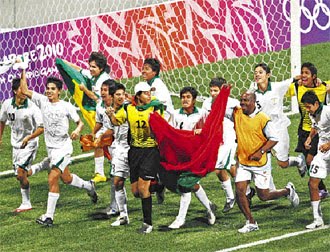
The Bolivian under 15 soccer team won a gold medal at the youth olympic games in Singapore!

I've always dreamed of Bolivia catching the eye of Singaporeans, a noteworthy feat worthy of accolades. And the YOG provided the platform to make concrete a personal dream. The Bolivians were awesome. They steamrolled over their opponents, including the Haitian team in the final. A Bolivian vs Singapore final was a mouth watering possibility that never materialized.

The sight of the Bolivian team singing the national anthem as the Bolivian flag was slowly raised in Singapore, was especially moving. Bolivia, my adopted homeland was triumphant in Singapore, land of my birth.

Thursday, August 12, 2010

Is It Worth It?

Do national security concerns justify injury and death during national service? 

Last year a young Singaporean died during national service. He wasn't the first, nor will he be the last. As a parent whose son also did his national service, the death of this 19-year old made me sit up and think about the cost of  NS. 


My son survived his NS obligations but he also could have lost his life in an accident. He didn't. But other parents go through the pain of losing their sons during National Service. Our sons benefit from NS. This is true, but do the benefits outweigh the dangers posed by the training and the loss of 2 years in the life of a young man? Perhaps not. And shame on us, if we shrug our shoulders and heave a sigh of relief that it wasn't our son who died. 

NS poses some tough questions. I don't know if I have all the answers but I see no harm in scaling down the training to one year. This reduction minimizes the risk of fatalities, provide our sons with more time to get ahead in education, and improve their career prospects. No, I am not against NS but there are benefits to reducing the present 2-year commitment.    


The death of a national serviceman last year forced me to put my thoughts in a post last year. I chose however keep it as a draft and to not post it. A year has passed. There's a greater sense of urgency to post it on this blog, now. So here it is. Better late than never:    


Another NS man dies after training!

Sad. And no, 19 - year olds aren't men. NS helps to discipline teenagers and instill a sense of patriotism and helps to put them on the path to manhood. Those doing NS are teenagers, still kids in some families. They don't deserve to die.

Deaths like these make one reflect and think about the meaning and cost of  NS.
 
The arguments for NS sound patriotic and right. None of them however justify the death of a 19-year old boy. We should work toward a zero casualty rate in training. Parents entrust their sons to the SAF for two years with the hope that no harm will befall their sons. 

Deaths during NS should shake us up. Is there a silver lining for those who grieve the loss of their loved ones?


The boy's name is Liam Kai Zheng. And yes, he was a boy - only 19 years old! His parents will not celebrate his 21st birthday nor will they attend his wedding. Forget about the grandchildren. The nation mourns the loss of Kai Zheng - a member of the wider Singapore family. He died for the sake of our security needs. Do our security needs require our sons to face the dangers and demands of military training for 2 years? 

Do they give their lives in order for us to feel secure? It might seem obvious for those whose sons either escaped unscathed during NS or whose call up for NS is still due. It's different however for those who've lost their sons during NS. It's easy to shrug our shoulders and get on with our life until we lose one of our own. 

My condolences to his family.

Here is an excerpt from the Straits Times May 23 2009,


After Mr Liam Kai Zheng, 19, got off the boat at the Singapore Armed Forces' ferry terminal in Changi, he was taken in an ambulance to the Changi General Hospital, where he died nine hours later on Friday morning.

Mr Liam had recently completed a four-day field camp before checking out of the Basic Military Training Centre in Pulau Tekong on Thursday night.


Tuesday, July 27, 2010

Bp NT Wright: NPP Protagonist
NEW PERSPECTIVE OF PAUL 
This post was inspiried after an exchange between blogpastor and myself over the merits and the demerits of the New Perspective of Paul on facebook. I refer to NT Wright because I am familiar with his writings and Wright represents the New Perspective of Paul (NPP).

Wright's view of Justification is covenantal, forensic and eschatological. "Faith" for Wright, not unlike circumcision, functions like a boundary marker which identifies gentiles as part of God's people. In Paul's historical context, a highly influential group believed that one had to be circumcised if one wanted to become a Christian. Paul opposed this view because he saw it as an intrusion which highlighted jewish ethnic nationalism at the expense of one's belief in Christ. Parts of Paul's letter to Romans and the letter to the Galatians gives creedence to Wright's emphasis.   

I sometimes think ... however that Wright unnecessarily gives emphasis to the the larger context of justification at the cost of the personal dimension of the justificiation which includes a person being declared righteous before a Holy God. Cant we have both? Paul was referring to a personal faith as a well as a faith which functioned as a boundary marker for God's people. A new believer's personal faith made him part of God's people without having to exhibit redundant Jewish religious beliefs  

I am all for a wider context of justification. My own understanding of justification has been enriched by the NPP but not at the expense of seeing faith as a personal belief. Wright is correct in saying that faith is a boundary marker but his view is deficient when he gives no space for faith as a personal belief. He tries to clarify himself elsewhere but you get the feeling he is trying to go beyond the old perspective. Hence the criticism that's levelled against him.

Here is an example of trying to integrate the old and new perspectives of Paul:

Romans 3:21-26 speaks of Christ's righteousness coming through faith. The faith described here refers to persona belief and a trusting relationship v. 22, 26. This is the old perspective. The NPP however go on to read Romans 3:27-31 as grounds for identifying faith as a new boundary marker for God's people which includes the gentiles v 28-30. The law/circumcision is viewed as a redundant boundary marker which only propagates a Jewish ethnicism which tries to make gentiles into Jewish proselytes. Romans 4 makes a lots of sense when read with the NPP lens. But the point is that the old perspective and the NPP is integrated when we marry Romans 3:21-26 with the Romans 3: 27-31.

Monday, July 19, 2010


FINISHING MY M.TH !


Praise the Lord! I graduated 2 weeks ago with a Masters in Theology from a Florida based Seminary in Santa Cruz, Bolivia. I finished my course work some time ago but did not find the time to complete my thesis and graduate. The bolivian based rector of the university gave me a non-negotiable deadline. 

I put everything on hold, slept a few hours a day, and worked hard at the thesis, "The Eschatological Character of the Anglican Eucharist". Working through the hypothesis wasnt easy and putting it all together was mind boggling at times.

By God's grace (which included large amounts of cups of black coffee) I finished the thesis a few days before the deadline. Presenting the thesis and defending it was a novel experience. I didnt quite know what to expect. Apparently the panel had never dealt with subject matters related to the anglican church! I was pleased with the grade given. Bishop Frank Lyons was very supportive of me doing post graduate studies and visited us on the weekend of the defense and the graduation.

Oh yeah I forgot...all my course work was in Spanish and so was the thesis.