Showing posts with label ANGLICAN CHURCH. Show all posts

Saturday, January 04, 2014

ST PATRICK & BOLIVIA

My introduction to the Irish was through some of their cultural icons: James Ussher, Edmund Burke,  U2, Van Morrison, Rory Gallagher, George Best, Liam Brady etc.  My experience in Bolivia has helped me appreciate the Irish people even more, especially with reference to St Patrick.    

Several years ago in a visit to Ireland (thanks to an invitation extended by SAMS Ireland and SAMS GB) I found similarities between the Irish and Bolivians. At their best, there is a charm - a happy go lucky spirit and a sense of fun which characterizes both cultures. Perhaps it comes from their common experience of being surrounded by larger nations with an imposing agenda. In Santa Cruz, Bolivia we have 2 Irish bars and restaurants.   

And I also discovered the relevance of St Patrick to the Bolivian Anglican Church.  Hence I have chosen to mark the Bolivian Beat with Patrick's Cross.  

Patrick was a missionary bishop with a heart for the people whom he served. The work in Bolivia requires missionary workers and a national leadership (including bishops!) with a deep love for the people they serve - a willingness to honor to not only the culture but to also understand and help Bolivian people realize their aspirations. The sensibility of identifying with the tragedy and the triumphs of the Bolivian narrative is also an imperiative.  Patrick embodied these missionary values.       

During my trip to Ireland I visited St Patrick's cathedral in Armagh and saw the place where he is purportedly buried. Patrick's life story at times resembles a movie or a TV series. I lifted these paragraphs from a website (http://www.biography.com/people/st-patrick-9434729): 

 When St. Patrick was 16 years old, he was captured by Irish pirates. They brought him to Ireland where he was sold into slavery in Dalriada. There, his job was to tend sheep. Saint Patrick's master, Milchu, was a high priest of Druidism, a Pagan sect that ruled religious influence over Ireland at the time. 

St. Patrick came to view his enslavement as God's test of his faith. During his six years of captivity, he became deeply devoted to Christianity through constant prayer. In a vision, he saw the children of Pagan Ireland reaching out their hands to him. With this, he grew increasingly determined to free the Irish from Druidism by converting them to Christianity.


His sacrifice, simplicity and power pervades the atmosphere of the Cathedral in Armagh which bears his name.  

Patrick was a reputed evangelist who prayed for the sick, cast out demons and who taught God's Word. No, he was not a cessationist. He used the 3 clovered shamrock flower to communicate the truth of the three persons of the Trinity ¡Legend has it that he emptied Ireland of its snakes! Here is another quote describing his work:

 Upon his arrival in Ireland, St. Patrick was initially met with hostile resistance. But St. Patrick quickly managed to spread Christian teachings far and wide. Through preaching, writing and performing countless baptisms, he convinced Pagan Druids that they were worshiping idols under a belief system that kept them enslaved. By accepting Christianity, he told them, they would be elevated to "the people of the Lord and the sons of God."

The Cathedral of St Patrick, the centre of the Church of Ireland, is not imposing but a testimony to the man's practicality and effectiveness.  He raised a community of monks, and the Cathedral we see today in Armagh was built around this monastic community, during the 5 century. It is very likely that monks were trained to spread the gospel, build disciples and to recieve the needy. A strong sense of community in Christ Jesus will always reach out to the lost. 

One cannot but sense the sacredness of Patrick's inspiration in the Cathedral sanctuary and grounds -  death has not silenced his message and testimony of Christ, to the world.

May the Lord grant us grace to learn from Patrick's example
!

Thursday, May 16, 2013

CONSECRATION OF FIRST ASIAN ANGLICAN BISHOP IN LATIN AMERICA


CONSECRATION OF FIRST ASIAN ANGLICAN BISHOP IN LATIN AMERICA

Archdeacon Raphael Samuel was formally consecrated as the Diocesan Bishop of Bolivia at a Sunday morning service of the eucharist  at Cristo Luz Del Mundo (Light of the World). The Presiding Bishop of the Southern Cone of the Americas, the Rt Rev Hector  “Tito” together with the Bishops from Peru, Uruguay and Paraguay led in the consecration of the new Bishop of Bolivia.   Bishop Raphael succeeds Bishop Frank Lyons who left the diocese of Bolivia last year to serve in the Diocese of Pittsburgh
The election of Archdeacon Raphael Samuel as the Bishop of Bolivia represents a landmark in church missions in that he is the first Asian missionary to be consecrated diocesan Bishop in the Spanish speaking Anglican world.

Bishop Raphael Samuel, is a Singapore clergyman sent by the Diocese of Singapore to serve in Bolivia. He and his wife, Michelle, are the longest-serving missionaries in the Bolivian Anglican Church.

Raphael, a Singaporean Tamil, was born in January 16th 1957. He was raised in a traditional Anglican parish and received Christ when he was a teenager. He hails from several generations of Anglicans and was educated in a Methodist school. After formal studies, he joined the Singapore Navy in 1974, after which he responded to the Lord’s call to serve in the Anglican Church in 1980.  At this juncture, a life-changing experience of the Holy Spirit, left a deep and lasting impression on his life.  As part of his preparation for full-time ministry, he studied theology for 4 years at Trinity Theological College, where he and Michelle met.  The communal setting at St Peter’s Hall, an Anglican institute for ministerial training in the campus at Trinity, served as an integral part of his formation as a priest in the Anglican Church.        

In 1991, the national director of Bolivian Church, Rev Greg Blaxland, visited Singapore with a view to raise missionary candidates for the work in Bolivia. At a meeting with the Singaporean clergy, he shared the need for ordained pastors to serve as missionaries in Bolivia.
Raphael, a pastor of a congregation, had already considered the possibility of serving in Latin America prior to Greg’s visit to Singapore.  A few years earlier, SAMS Australia’s General Secretary, Rev Ted Newing had counseled him to pray and wait for the Lord’s timing. The invitation from Bolivia came as a confirmation of God´s calling to serve in Latin America. Bishop Moses Tay, the former bishop of Singapore, played an active role in forging links between the diocese of Singapore and the work in Bolivia.  


Raphael, Michelle and their 3-year old son, Elijah, arrived in Bolivia in January 4th 1993. He and Michelle spent 6 months studying Spanish and the intricacies of cross cultural work at the Maryknoll Language Institute in Cochabamba, Bolivia. Since then, Raphael, has worked actively in the Bolivian diocese on several levels. He served as pastor of a congregation in Santa Cruz, and as Archdeacon of the diocese; has helped the Bolivian church acquire diocesan status, started new works; raised leaders, and assisted local clergy to assume the leadership of the congregations. Raphael completed his Masters in Theology in Spanish in 2010 and is working on further post graduate studies in the area of family counseling.      

His wife, Michelle, is actively involved in various ministries in the church, especially in the area of worship and the creative arts. Their son, Elijah, is due to graduate from a university in Singapore this year. 

Saturday, December 19, 2009


¡SIN PELOS EN LA LENGUA!


El obispo John Rodgers (ACNA) responde a las declaraciones del Arzobispo Rowan Williams con relación al proceso se llama la Alianza Anglicana – La supuesta solución a la ruptura en la Comunión Anglicana debido a la consagración del obispo homosexual por la iglesia episcopal en los estados unidos.

19 diciembre, 2009 Anunciado en Noticias


La cita siguiente es del Arzobispo de diciembre de Cantórbery en su charla en el año 2008 sobre su comprensión de la naturaleza de la Alianza Anglicana propuesta de la Comunión y su función.

"No será una constitución, y ciertamente no será un código penal para castigar a personas que no obedecen," él dijo. "Pero lo que representa es esto: en los últimos años en la familia anglicana, nosotros hemos descubierto que nuestras relaciones uno con el otro como las iglesias locales a menudo han sido esforzadas, que nosotros no hemos aprendido a fiarse del uno al otro como quizás debemos, que debemos realmente construir las relaciones, y nosotros debemos tener un sentido que somos responsables uno al otro y responsable de uno al otro. Es decir, lo que necesitamos es algo que ayudará nosotros sabe donde nosotros nos paramos junto, y nos ayudamos también intensificamos nuestra confraternidad y nuestra confianza".

Mientras concuerdo con el Arzobispo que anglicanos deben aprender a fiarse de y para ser responsable uno al otro, yo tengo la convicción de que esta perspectiva de la Alianza es demasiado débil para unir la Comunión Anglicana. La fe cristiana surge de la Palabra autoritaria de Dios en Jesucristo y en las Escrituras Santas que nos conservó por el Espíritu Santo. Las Escrituras declaran verdaderamente el Evangelio o no y el contenido de la Fe Apostólica y los Sacramentos del Evangelio celebra el mismo o no. Anglicanos han comprendido correctamente y cree en el Señor que es revelado en y por ese Evangelio y la Fe Apostólica o no y no hay un lugar neutral con respeto a la Fe o el Evangelio. Este asunto fundamental necesita ser declarado decisivamente sin ambigüedades.

Anglicanos no son y nunca han sido una mera asociación "natural" de la familia Cristiana donde el único punto de referencia es de fiarse del uno al otro sin tomar en consideración la Fe Cristiana. Más bien hemos sido desde el comienzo y somos una familia que confiesa unido en el Evangelio y la Fe Apostólica como el conjunto encontrado en las Escrituras en la misma manera como enseñaron los antiguos Padres de la iglesia, y de los Concilios Ecuménicos antiguos Este Evangelio Apostólico y Fe.

Comprendemos y celebramos como Anglicanos el evangelio apostólico y la Fe que son expuestos en los Credos católicos, los 39 Artículos de Religión, y de la 1662 Liturgia de la Iglesia Anglicana y el Ordinal. Si nosotros no podemos confesar que el Evangelio y la Fe juntos, nosotros no tenemos una unidad genuina para confesar ni profundizar.

Tenemos una constitución en el Evangelio y Fe Apostólica como nosotros los Anglicanos lo hemos recibido, y cualquier Alianza de la Comunión Anglicana debe celebrar y lo debe confesar autoritariamente, claramente y agradecidamente. Nada hará menos.

Que Tenga una Navidad maravillosa

+ John H. Rodgers Jr.

El Obispo en la Iglesia Anglicana de Norteamérica

(AMIA)
TRUTH-TELLING 

 Bishop John Rodgers (ACNA) responds to Archbishop Williams’ understanding of the Communion Covenant December 19th, 2009 The following quote is from the Archbishop of Canterbury’s December 18th video talk and describes His understanding of the nature of the proposed Anglican Communion Covenant and its function. "It's not going to be a constitution, and it's certainly not going to be a penal code for punishing people who don't comply," he said. "But what it does represent is this: in recent years in the Anglican family, we've discovered that our relations with each other as local churches have often been strained, that we haven't learned to trust one another as perhaps we should, that we really need to build relationships, and we need to have a sense that we are responsible to one another and responsible for each other. In other words, what we need is something that will help us know where we stand together, and help us also intensify our fellowship and our trust." While I agree with the Archbishop that Anglicans do need to learn to trust and to be responsible to one another, I am convinced that this view is far too weak to serve a Communion as a unifying Covenant. Christian faith arises from God’s authoritative Word in Jesus Christ and in the Holy Scriptures as sealed in us by the Holy Spirit. The Scriptures either declare the Gospel and the contents of the Apostolic Faith and the Sacraments of the Gospel celebrate the same or they do not. Anglicans have either rightly understood and believe in the Lord who is revealed in and through that Gospel and Apostolic Faith or we have not and do not. This fundamental matter needs to be decisively addressed and declared unambiguously. Anglicans are not and never have been a “natural” family learning to trust one another irrespective of our Faith. Rather we have been from the beginning and are a confessing family united in the Gospel and the Apostolic Faith as set forth in the Scriptures, and as taught by such teachings of the ancient Fathers, and the early Ecumenical Councils as are agreeable to the same Scriptures. This Apostolic Gospel and Faith, as Anglicans understand them and celebrate them, are set forth in the Catholic Creeds, the 39 Articles of Religion, and the 1662 Book of Common Prayer and Ordinal. If we cannot confess that Gospel and Faith together, we have no unity to confess and intensify. We do have a constitution in the Gospel and Apostolic Faith as we Anglicans have received it, and any Communion Covenant should celebrate and confess it authoritatively, clearly and thankfully. Nothing less will do. Have a wonderful Christmas and Christmastide, +John H. Rodgers Jr. Bishop in the Anglican Church of North America (AMIA)

Thursday, October 22, 2009


LA IGLESIA ROMANA "ROBA" A LAS OVEJAS ANGLICANAS?

Detrás las sonrisas y reuniones ecuménicas, la Iglesia Romana no escondió su intención de llevar a los Anglicanos a su redil.

El Papa Benedicto XVI esta semana creó una estructura eclesiástica se llama el ordinatario para los Anglicanos descontentos que quieren unirse a la Iglesia Romana.

Segun el documento, los Anglicanos pueden mantenerse algunos de sus distintivos y ser católicos. Será interesante ver los detalles de esta nueva iniciativa.

Hay muchos anglicanos descontentos en estos días debido en gran parte a la falta de Rowan Williams, el arzobispo de Canterbury, y los neo liberales dentro de la estructura anglicana para disciplinar a los dirigentes de la Iglesia Episcopal de EEUU por haber consagrado un homosexual practicante como Obispo diocesano! Rowan Williams, de acuerdo a sus acciones, ha manifestado su simpatía con la gente que esta impulsando los intereses de los gays dentro de la iglesia Anglicana en EEUU y Gran Bretania . Hay gente comprometida a la autoridad Bíblica en la iglesia Anglicana que no va a poder reconocer tal trayectoria. Entonces no era una sorpresa cuando muchos obispos ortodoxos asistieron el Lambeth Conference del año pasado como una señal de su desconformidad a la posición ambigua del Arzobispo de Canterbury.

En medio de este desorden el Santo Padre vio la oportunidad de invitar y recibir anglicanos, especialmente a aquellos tradicionalistas en Gran Bretañia y EEUU que quieren salir de la Anglicana. Acaso esto no es robo de ovejas? Ninguno de los Primados Anglicanos, de las regiones que se verán afectados por este último mover de la Iglesia Romana, no ha dicho nada en contra de la acción Romana. Ni uno de los Primados de la Comunión Anglicana ha respondido a este desafío mediante la exposición de la confusión doctrinal en Roma a la luz de la verdad bíblica.

La Comunión Anglicana después de no haber disciplinado el liderazgo de la provincia que consagró un homosexual practicante como obispo diocesano,  no tiene ahora la sustancia teológica para refutar los errores de Roma y cuestionar la iniciativa romana en el ordinatario.

En cierta medida uno tiene que admirar la Iglesia Romana, especialmente el Papa, por su discernimiento espiritual para abrir las puertas de su iglesia a un grupo de personas estaba buscando un refugio donde hay claridad bíblica y teológica en este tema de homosexualidad . Planificaron bien su mover con su gente y cuando llegó el momento propicio, lo hicieron sin renuencia. ¡

Que el Señor sea Juez sobre su iglesia!

SHEEP STEALING?

Behind the ecumenical smiles, handshakes and documents, Rome never hid its intention of wanting Anglicans back to the fold...their fold!

Pope Benedict in an earth shaking move this week provided a special ecclesiastical structure, the Ordinariate, for disaffected Anglicans to join the Roman Church. Anglicans can now hold on to some of their distinctives and be Roman Catholics. It will be interesting to see how this unfolds as the Pope's plan is implemented.

There are many disconted Anglicans, these days, due in large part to the failure of Rowan Williams, the Archbishop of Canterbury and his enablers to discipline the leadership of the American Episcopal Church for having consecrated a practising homosexual! Crossing the Tiber emerged as an option. Rowan William's sympathies, judging by his actions, are clearly on the side of those who are sympathetic to the homosexual cause. Is it any wonder that many Anglican bishops, especially from Africa, did not attend last year's Lambeth Conference as a sign of their disappointment of the Communion's direction?

In the midst of this disarray, the Holy Father saw an opportunity to draw Anglicans, especially from the Anglo Catholic mould. And he seized it! Isnt this sheep stealing? None of the Anglican primates, from regions which will be impacted by this latest move from the Roman Church, seem to think so.

Not one...yes, not one Primate from the Anglican Communion has responded to this challenge by highlighting Roman doctrinal confusion in the light of Biblical truth. And the reason is simple: the worldwide Anglican Communion in NOT disciplining an errant province, TEC, does not possess the substance to reveal the incompatibility of Roman beliefs and Biblical teaching. But here's the irony: the contemporary crisis of the Anglican Church has caused Anglicans in liberal dioceses to seek refuge in orthodox Roman parishes. Some of the Anglican reformers are probably rolling in their graves.

You gotta give Rome an A for audacity. Pope Benedict, saw an opportunity to attract Anglicans to Roman Church. And he made use of this opportunity!

So is this sheep stealing?

Bible believing Anglicans of the more reformed variety with roots in the 39 articles will view this Roman intiative as interference and sheep stealing. Traditional Anglican sacramentalists in liberal Anglican Provinces however will welcome the Ordinariate as an indirect rebuke to their ecclesiastical leaders.

Sunday, August 31, 2008

LAMBETH CONFERENCE 2008

MIDDLE-OF-THE-ROAD LIBERALISM AT WORK!

WHO ARE THE MIDDLE-OF-THE-ROADERS?

Never underestimate the influence of a coterie of middle-of-the-road liberal Anglicans over the worldwide Anglican Communion (AC).

Led by the present Archbishop of Canterbury, these liberals come from many parts of the communion: US, Britian, Australia, New Zealand, Canada, Asia and Latin America. By and large they were responsible for orchestrating the processes and outcome of the Lambeth conference. Building alliances, majoring on nuances and negotiating with opponents are their core values. Although using Biblical language comes easy to them they are agnostic when it comes to believing the Bible's final authority.

They hold to an ongoing tension between God’s revelation in scriptures and the voice of the Holy Spirit in contemporary human aspirations for liberation. They value all opposing views of a given issue, will not take a clear stand, veering toward views which question prevailing orthodoxy.

Their sympathies lie with homosexuals in committed relationships; with time they believe that everyone will see reason and embrace gays. Their strategy in the AC is to mark time with endless discussions and convey the appearance of a resolution. Hence their willingness to sign on the dotted line of any document which upholds inherited Biblical views concerning homosexuality WITHOUT any clear provision of disciplining those who continue to defy the Biblical position.

THE ANGLICAN BRAND NAME

Anglican or Episcopal to the middle-of-the-roaders is akin to Rolls Royce or Mercedes Benz. Prestige is attached to being Anglican or Episcopal in social circles where inclusiveness is prized. This is partly due to the Anglican Church's appeal to the educated and professional classes and its status as an established church in the UK.

The Anglican church's place in Singapore is also derived from a special statute in the nation's constitution. With such a pedigree its normal for the church to enjoy a degree of acceptance by certain sectors of the governing elite, especially of the liberal ilk. Any disciplinary move against gays would be a sign of intolerance and not reflect the qualities of a church's pedigree. To discipline those practicing same sex blessings diminishes the quality of the Anglican or Episcopal brand.


LIMITS OF BIBLE BELIEVING PRIMATES/BISHOPS

Yes, Bible believing Bishops and the Global South Primates, represent the vast majority of Anglicans. Their strength in numbers however does not translate into the ecclesiastical power (finances, knowledge of judicial processes and political infighting) necessary to expedite changes and reform. Many of them, because of their traditional deference to the Archbishop of Canterbury (ABC), especially in Asia, would find it traumatic to consider sidelining, or God forbid, to even consider disciplining the Church of England (COE)!

The Bible believing Bishops and Primates, though formidable in restraining the middle-of-the-road liberal agenda within the Communion do not really pull the levers of power.

To their credit they've also managed to ensure a sound biblical perspective of homosexuality in official declarations and documents. This positive contribution however is not muscular enough move the mechanisms necessary to discipline those who've silently or blatantly ignored the injunction against same sex blessings and the consecration of gay Bishops.

MUDDLE OF THE MIDDLE

Middle-of-the-road liberals are concerned of the reaction from ordained homosexual clergy within their own ranks if they are seen to discipline the TEC.

The Church of England (COE) is a case in point. Recently the British government passed a law allowing gay couples to legalize their relationships in a civil union. The COE, in recognizing gay clergy within their ranks, allowed them to enter these civil unions, with the proviso that they restrain from having sex and inform their Bishops of their live-in relationships.

It is only a matter of time before a practicing gay is consecrated Bishop in the British Isles.

Is there a moral equivalence between TEC's decision to consecrate a gay bishop and the COE's decision to allow their gay priests to enter into civil unions?

It's difficult to believe that the Archbishop of Canterbury, the symbolic head of the Anglican Communion and the COE, is not constantly looking over his shoulder to measure the impact of his decisions and statements on the gay lobby and their clergy as he leads the Communion. This is one of the main reasons why affirmations of support for the Biblical position concerning homosexuality are accompanied by ambiguous comments designed to elevate the gay hermeneutic on the same level as the inherited Biblical position on homosexuality.

The Lambeth Conference was no exception to the rule.

Declarations of support for the Biblical position concerning homosexuality were accompanied by attempts to stir discussions between liberal and conservative Bible believing bishops so as to create an environment where the possibility of gays living in a committed relationship could be bandied about.

The two leaders, a New Zealander and a South African, in charge of the bible study at Lambeth were pushing views aimed at diluting Resolution 1.10 from the 1998 Lambeth Conference (this resolution clearly spelled out the incompatibility between Biblical teaching and homosexual activity).

WILL THE COVENANT WORK?

A ray of hope is the formulation of a Covenant which will prevent a repetition of the present crisis.

Anglican Provinces will be asked to sign on to a Covenant that sets standards for all and provides boundaries for those who choose to be a part of this arrangement. A violation of these boundaries will potentially trigger a disciplinary process. Of some concern is the proposal that the ABC adjudicates the disciplinary process. Will the ABC provide clear leadership in maintaining the integrity of the Faith as preserved and handed to us by the Apostles? Probably not, if his performance in the handling of the current crisis is anything to go by.

Many have criticized the covenant because the present crisis of the AC is not within the purview of this Covenant.

Those who opt out of the Covenant will probably not belong to the first tier membership within the AC. The necessary approvals will have to be settled at a meeting of the Anglican Consultative Committee (ACC) in the middle of next year. At Lambeth the proposals of the covenant were received and accepted for further deliberation and approval from the various provinces which constitute the AC.

ABC & LAMBETH

The ABC's 3 speeches at Lambeth were a mixed bag. The 1st was a general description of the current state of affairs, the 2nd was an ambiguous attempt to define the question of homosexuality as a clash of differing perceptions - the African and the American.

The intent however was clear: he was trying to bring the gay hermenuetic on par with the Resolution 1.10. Bible believing Bishops reacted negatively and strongly. Predictably the ABC in his 3rd speech back tracked with comments which pleased them. This seems to be his modus operandi. The ABC is known for these swings from one position to the other.

Lambeth 2008, taken as a whole, ended on this rather unsure note.

CONCLUSION: SO WHAT’S NEXT?

Firstly, no decisions were made and critical issues were left for someone else to sort out in a not too distant future. Secondly, it’s going to take a long time for the AC to pick up the pieces with respect to its global unity. Thirdly, any province which approves the consecration of a practicing gay as Bishop will send the AC as it is presently structured, into oblivion. Fourthly, a growing number of parishes, dioceses together with some Provinces are coalescing around GAFCON - a group of Bible believing primates and bishops who are offering an alternative centre of authority for those who wish to align themselves to an unambiguous approach to Bible based Anglicanism.

So what's next? Well, the general convention of TEC will meet to decide if they wish to continue to temporarily suspend the consecration of practicing gays and unambiguously stop the blessing of same sex unions. The ABC is also calling a meeting of the Primates early next year.

2009 promises to be an interesting year!

Tuesday, July 01, 2008


CAN THE ANGLICAN COMMUNION DISCIPLINE ITSELF?

The answer, till now, is NO.

REJECTING BIBLICAL AUTHORITY
Liberal forms of Anglicanism in the West (USA, Canada, Britain) treat the Bible as a book of some value with some good teachings. They shy away however from revering the Bible as THE final authority when it comes to belief or behaviour of a Christian. Social movements and reason based speculative thinking have held sway in the liberal camp. This has colored their views on gender and host of other issues.

Hence it was not a surprise when liberal bishops, under the influence othe gay lobby, began to ordain, albeit discreetly, homosexuals and privately blessed same sex unions. The public consecration in 2003 however of an openly gay person as a the Bishop of New Hampshire and the official approval of same sex blessings in a Canadian Diocese, New Westminister, were ground-breaking events which shattered the unity of the Anglican Communion. Anglicans who viewed homosexuality as a sin saw these acts as a frontal assault against the final authority of the Bible.

The tragedy is that no one has really been brought to task for what's happened. Gene Robinson, the first openly gay person with a live-in partner, still remains the Bishop of New Hampshire. Those who consecrated him were invited to the Lambeth conference! The diocese of New Westminister together with other Canadian Anglican churches have not stopped the lurch toward the blessing of same sex unions.

FAILURE TO DISCIPLINE
Moderate Anglicans tell themselves constantly that they have no clear or formal international ecclesiastical structures (a world-wide ecclesiastical court for example) to discipline heretical Bishops and wayward Provinces. There is some truth to this but it is not the whole truth.

This crisis for instance forced the Communion to look into the area of mutual accountability and discipline. The most promising Anglican institution to bring some measure of order into this murky situation is the bi/tri-annual meeting the Anglican Primates. They have slowly, much to the chagrin of the liberals, tried to provide the boundaries to keep out behavior and beliefs which are contrary to the Anglican Communion.

The decisions however by the Primates to hold the American church to account have not been followed through. The liberals, who hold the power in the higher echelons of Anglican Communion, have managed to stymie the efforts of the Primates. Hence the only recourse was to depend on the Archbishop of Canterbury (ABC) to use the moral authority of his office.

The ABC dropped the baton. His failure to implement disciplinary measures decided upon by the Primates to set right the situation in North America, served to undermine the credibility of the worldwide Anglican Communion. Rowan Williams, the present ABC is at the core a neo-liberal. He may sound evangelical at times but in essence he probably does not view homosexuality as a sin (if anyone can show me a written paper or sermon by him which proves otherwise...I will publish a retraction with an apology).

HEART OF THE CRISIS
Biblical Church discipline is a crucial component in the life of God's people. Paul in his Epistles never backed down from disciplining errant leaders and correcting sinful behaviour in churches. The Reformation of the 16th Century identified it as a mark of the church. And so it is normal for Anglican dioceses to have ecclesiastical courts where errant clergy and Bishops are tried according to Canon Law. A similar mechanism exists in various provinces of the Anglican Communion in the world to discipline bishops of dioceses. But even a disciplinary mechanism i.e an ecclesiastical court is rendered meaningless if these courts are stacked with officers who don't believe in the basic tenets of the faith!

The absence of a sufficient number of orthodox Bishops and clergy to put the brakes on rampant liberalism in the Anglican instruments of unity together with the failure of the Anglican Communion to constitute an international mechanism to discipline errant Bishops and Primates who've never been held to account in their provinces for their unbiblical beliefs and practices is not only an adminstrative problem but a deep seated defect in Anglican ecclesiology (understanding of the Church).

In the other words, can the Anglican church therefore say it is part of the One, Holy & Catholic and Apostolick Church of the ancient creeds when it cannot rein in wayward clerics in their local settings who've defied the very doctrines and beliefs of its confession?

This is at the heart of the crisis we face.

THE HOPE AND PERIL OF LAMBETH CONFERENCE
The upcoming Lambeth Conference, a once in 10 yearly meeting (last one was held in 1998) of all the bishops within the Anglican Communion will gather in England to discuss issues and bring their experiences to the table. In 1998, a resolution 1. 10 which clearly spelt out the church's traditional teaching on homosexuality was passed with a massive majority. It dealt a severe blow to the gay lobby. Since then however the Anglican Communion has been unable to put into practice resolution 1.10 within the American and Canadian Churches.

It appears that there will be no clear admonishment and disciplinary action of the American church at the Lambeth Conference. The Liberal Bishops from the States might get a slap on the wrist to please Bible believing Bishops but there is a feeling that Lambeth will not put into place anything substantial which will deal with the problem of ordaining practicing gays & lesbians and the blessing of same sex unions.

THE PROMISE OF GAFCON
Hence the importance of the recently concluded conference, GAFCON (Global Anglican Future Conference), at Jerusalem. The final communique was a bit of a stunner because it declared the office of the Archbishop of Cantebury (ABC) as being irrelevant to its claim as symbolic head of the Anglican Communion. This was the wording: While acknowledging the nature of Canterbury as an historic see, we do not accept that Anglican identity is determined necessarily through recognition by the Archbishop of Canterbury

The Primates who attended GAFCON formed a Council of Primates which will now be a new ecclesiastical centre for all who wish to distance themselves from the ABC and hold themselves accountable to another structure within the Anglican Communion apart from Cantebury. The Lambeth Conference will now have no choice but to deal with the problems posed by the American Church and the challenge of this new movement-structure, GAFCON.

A tepid response with no disciplinary bite from this years Lambeth Conference will result in many Conservative Bible believing Bishops and dioceses to align themselves with the GAFCON conference Primates. The leaders of GAFCON have repeatedly said that they are not a breakaway group but a movement committed to the preaching of the gospel within orthodox Biblical faith.

And so we sit and wait for the final communique of the Lambeth Conference 2008!

Tuesday, June 24, 2008

FUTURE OF THE ANGLICAN COMMUNION!

DRAWING A LINE IN THE SAND

Close to 1200 Anglicans - Bishops, clergy and laypeople have gathered at a conference, Global Anglican Future Conference, (GAFCON) in Jerusalem from June 22nd to 29 to chart a new course in the Anglican Communion. All the participants in one way or another view the consecration of Gene Robinson, a practising gay cleric, as bishop in the American Episcopal church as having brought about an irreconciliable division between the more liberal leaning northern hemisphere (Britian, US & Canada) and bible believing anglicans from the south (Africa, Asia, Latin America). There are of course exceptions to his division. British evangelicals join with the conservative south to condemn the consecration of a gay bishop. American Bble believing anglicans have either left the episcopal church or chosen to fight for their cause. The liberal Brazilian province stands with their sponsors in the US.

REASON FOR THE DIVISION

This rift could have been avoided if the present Archbishop of Canterbury, Rowan Williams, had consistently stayed true to the decisions by the Primates to discipline the American Church. The deadline to discipline the wayward American church in September 2007 passed without any action on his part. Many, within the evangelical Anglican camp, lost confidence in him as a result.

DYNAMICS OF GAFCON & LAMBETH

At play is the Lambeth Conference, a special meeting of all the bishops in Anglican Communion who meet once every ten years. They are scheduled to meet in July this year. A large chunk of the African bishops could not in their conscience attend this conference because Bishops in the American church who approve of the blessings of same sex unions were invited. Gene Robinson, the gay bishop, was not invited as a move to placate conservative Anglicans. Hence the decision to build an alternative evangelical voice i.e GAFCON in Jerusalem. The conference seeks to unite those who believe in biblical authority with the intention of building a structure/network which opposes and goes beyond the current Canterbury policy which seeks to reconcile those who believe in the integrity of the gay position with those who don't.

There are also however quite a sizeable number of Bible believing Bishops, clergy and laity who believe that a way can be found within the present structures to save the Communion from the homosexual lobby. Many of them are attending GAFCON and Lambeth. Some, the conservative Bible believing institutionalists, have decided not to attend GAFCON, viewing it as schismatic and will only attend
Lambeth. I respect those who have chosen to work within the present structures and I admire the prophetic gumption of those who've taken steps to build a structure which does not have as its centre the Archbishop of Canterbury.

A PERSONAL TAKE : DIVISION AS JUDGEMENT

The Anglican Communion has never been mired in such controversy as the current one with the exception of the tumultous events of the Reformation which caused Rome to split from the Church of England!

My take?

Well, division is sometimes the result of God using the sword of his word to divide or separate the good from the bad. The Bible is rife with the language of division: the wheat from the chaff, sheep from the goat, light from darkness. It is a necessary but unpleasnt experience: having the sword of the Lord to penetrate and divide us before he puts us back again on His terms (Heb 4:12; Matt 10:34; 1Cor 11:19). The divisions emerging within the Anglican Communion strike me as part of a fiery process which will burn away our sin.

Lord have mercy on us all!!


Wednesday, February 27, 2008


NEW ARCHBISHOP OF MYANMAR!

Bolivian Beat Met The New Archbishop?

Meet the new Archbishop of Myanmar, Bishop Stephen Than Myint! On his right is Bishop Henry Scriven.

Bishop Stephen is a Karen Christian and Karens are not the most popular ethnic group in Myanmar. Karens, not unlike the Kurds in Northern Iraq, harbor nationalistic/autonomous aspirations. Its not the best of situations to be in. Third world clergy also struggle against adversity in some very difficult situations.

I met a Burmese bishop at Trinity Theological College's library recently; he looked a lot like Bishop Steven. In fact I think he was Bishop Stephen!! We shared our experiences. One point of common interest was the political instability of both, Bolivia and Burma.

His statement that he was a simple priest and not a politician struck a deep chord.

Pray for the good Archbishop!

Tuesday, February 20, 2007


PRIMATES WIELD THE SWORD BUT DON'T USE IT...NOT YET ANYWAY.

PRIMATES GIVE THE AMERICAN EPISCOPAL CHURCH UP TO SEPTEMBER 2007 TO RENOUNCE SERVICES OF SAME SEX UNIONS AND CONSECRATION OF GAYS IN EPISCOPAL ORDERS (Abp Rowan Williams seen here participating in special service at Zanzibar, Tanzania)


CONFUSION IN SANTA CRUZ, BOLIVIA 2003

I still remember the shock, embarrasment, anger and confusion written over people's faces when news of Gene Robinson's election as bishop in the US hit Santa Cruz, Bolivia. He was a practising homosexual who had left his wife to live with a male partner; his consecration service was transmitted, live, into the homes of everyone in Santa Cruz, including our church members, courtesy of CNN.

The congregation was distracted because of all the publicity given to the consecration; they did not understand how an entire province could have gone astray. And how was it possible for a gay person to be ordained deacon and priest in the first place? Those were challenging times for us in Santa Cruz. I had to sit with leaders, work through the Biblical issues and dig into church history to show how apostasy was not uncommon in the highest councils of of the ecclesiastical hierachy; the diocese of Bolivia took out advertisements in the local newspapers to disassociate ourselves from the American church. This helped to clarify the situation amongst the local populace and improved our relationships with folk from other Christian churches.

Time flies. Its hard to believe that this took place 4 years ago. Since then various attempts have been made to convince the American church to renounce same sex blessings and the consecration of gay bishops. Their responses to the worldwide communion were slow, feeble and ambiguous. A clear deadline however is now in place; the sword of discipline hangs over the american church.

PRIMATES WIELD THE SWORD IN TANZANIA

The Primates met in Tanzania at the end of last week under this dark cloud. After several days of meetngs the communique was released. The key statement was for the American church to renounce both same sex blessings and the consecration of gay bishops before the end of September 2007. The consequence of not doing so, would indicate a decision on the part of the American church to walk away from the worldwide anglican communion.

An interesting plan has also been put forward to try and help bible believing parishes and dioceses to work under the covering of a council headed by a separate primate called a primatial vicar; this council of 5 bishops will function within the present episcopal structure in the States. Will this really work? Probably not but it might be worth a try. The Archbishop of Canterbury called it an experiment. It will only work if liberal bishops have a change of heart; its difficult to envisage such a scenario.

I was expecting a stronger response from Tanzania but maybe this patient approach by the Primates will yield more fruit.

Tuesday, February 13, 2007


THE FINAL SHOWDOWN!


ANGLICAN PRIMATES MEET THIS WEEK IN TANZANIA TO RESOLVE MAJOR CRISIS IN THE AMERICAN CHURCH


This is the "mother" of all meetings where the anglican communion will be reshaped.

AMERICAN CHURCH IN CRISIS

The Global South Primates are pushing for a new Anglican jurisdiction in the US to represent anglicans who've left the existing episcopal church. They will also insist that the episcopal church in the US be disciplined. The reason for this furore? A practising gay man, Gene Robinson, was consecrated bishop in the American Church 4 years ago. Providing services of blessing for same sex partners living together was the other straw which broke the camel's back.

An important resolution, highlighting the incompatibility between homosexual behaviour and the Bible, was passed at a meeting of all the anglican bishops in 1998; it was totally ignored by the american church toward the build up of Gene Robinson's consecration in 2003. Subsequent warnings and the suspension of the episcopal church's delegates within the major bodies of the Anglican Church were not taken seriously. The exodus of orthodox anglicans and parishes did not seem to perturb the episcopal church hierachy. Their inability to meet the requirements of a previous meeting of the primates at Dromantine, Ireland 2 years ago was predictable; most of their bishops are hard core liberals. Electing a liberal primate, fully supportive of the gay agenda only provoked the majority of the primates even further.

ONE POSSIBLE SCENARIO IN TANZANIA

The newly elected primate of the american church, Jennifer Schori, was invited to explain the actions of the american church before the primates in Tanzania. Many primates will only receive her as someone under discipline. They will not share the Eucharist with her; most of their provinces have declared a state of impaired communion between themselves and the american church (the Global South Primates did not share the Eucharist with the previous american primate either).

My predictions: The Episcopal church will be disciplined; their membership will be suspended in the worldwide anglican communion. The scale of the suspension will depend on Schori's representations and the reaction of the global south primates to the ideas and leadership of Rowan Williams. Bishops who do not accept the resolution outlining the anglican communion's understanding of homosexuality and the Windsor Report (a report put together by a special committee which asked for the suspension of gay bishops and services of blessing for gay couples) will NOT be invited to the Lambeth Conference.

A POSSIBLE FUTURE FOR BIBLE BELIEVING ANGLICANS IN THE STATES

Work on a parallel structure will also hopefully begin in earnest; this is going to be a gargantuan task because bible believing parishes and congregations that left the american episcopal church don't want a monolithic structure similar to the one they left. Many of these congregations and parishes are spread out through a variety of networks, regions and groups; they enjoy the oversight of overseas bishops and primates; getting them under one roof will be like herding cats!

Lord Have Mercy On Us All

Wednesday, January 17, 2007


QUEEN ELIZABETH AND THE REFORMATION

FitzSimons Allison (Bishop) and Willliam McKeachie (dean), make the argument below, against their opponents, that the Anglican church's commitment to the beliefs of the Reformation in the 39 articles underscores the church's theological belief system. They give credit not to Henry VIII but to his daughter Queen Elizabeth 1 for "having laid claim to Protestant freedom while at the same time maintaining Catholic order"

I lifted the piece below from TitusOneNine.

They have forgotten, for instance, that the Reformation of the Church of England dates not from King Henry VIII but from Queen Elizabeth I a quarter century later. Her predecessor, Queen Mary, had tried to restore England to a medieval and papal form of Catholicism from 1553 to 1558. It was only under Queen Elizabeth that the Church of England laid claim to Protestant freedom while at the same time maintaining Catholic order.

Today’s re-appraisers (in academic circles they would be called revisionists of history) as quoted by Adam Parker have willfully forgotten that the ecclesiastical formularies of the Elizabethan Settlement - the traditional Book of Common Prayer, the confessional Thirty Nine Articles of Religion, and the series of sermons known as the Homilies - are the very bedrock of Anglican identity, unity and well-being. They cannot be ignored or replaced by sentimental “bonds of affection” devoid of theological doctrine.

Such willful amnesia leads these revisionists to misappropriate Henry VIII as the “founder” (an old canard repeated twice in “A House Divided”) while ignoring the biblical Reformation that did not begin until the reign of Henry’s son Edward VI and was not secured until Elizabeth’s reign.
Henry VIII may, for his own sinful ends, have separated the Church of England from the Papacy, but late-medieval Roman Catholicism required longer, indeed required the blood of the Protestant martyrs, to be reformed.

When biblical doctrine is forgotten as being essential to true unity, the alleged diversity celebrated by today’s revisionists quickly exposes itself as tyranny against biblical Christians. Richard John Neuhaus has identified this sleight of hand in his dictum: “When orthodoxy becomes optional, it soon becomes proscribed.”

Dozens of Episcopal Church dioceses today, in which biblically faithful Christians are marginalized, manifest this tragic irony. Dozens of Episcopal bishops in such dioceses have willfully forgotten that the original Episcopal consecration vows administered until the late 20th century included explicit assent to the following questions:

- Will you then faithfully exercise yourself in the Holy Scriptures, and call upon God by prayer for the true understanding of the same: so that you may be able by them to teach and exhort with wholesome Doctrine, and to withstand and convince the gainsayers?

- Are you ready, with all faithful diligence, to banish and drive away from the Church all erroneous and strange doctrine contrary to God’s Word; and both privately and openly to call upon and encourage others to the same?

The forgetfulness, indeed total disappearance, of such commitment since the new Episcopal Prayer Book was adopted in 1979 has caused many Episcopalians to seek the cover of overseas Anglican bishops in order to remain faithfully rooted in the Catholic order and Protestant freedom of the Anglican Reformation.

Kevin Wilson’s claim that under Queen Elizabeth “no one agreed on theology” is nothing but another example of forgetfulness and denial. The disagreements in that era were minuscule compared with those of Episcopal bishops today who have turned their backs on the theological content of the very vows they swore at their consecration.

For her part, Barbara Mann has forgotten, in her claim that we are not a confessional church, the Thirty Nine Articles of Religion as integral to the well-being of Prayer Book Anglicanism and “established” by the bishops, clergy, and laity of the Protestant Episcopal Church of the United States of America in 1801. Her false claim allows her and others like her to accommodate the church to the world, rather than the world to Christ, against which St. Paul strongly warned in his Epistle to the Romans.

Such amnesia leads Barbara Mann to reduce matters of theological substance to a “power struggle.” As George Marsden has observed: “Without theism … the only effective arbiter of contested moral claims is power.” Thus these revisionists ironically expose their own motivation: they have taken power and have proscribed orthodoxy!

But nothing more clearly exposes forgetfulness of the biblical substance of the Christian Faith than Steve Skardon’s “willingness to reconcile scripture with contemporary society” or Barbara Mann’s assertion that the Holy Spirit and its influence change as people change. This willful amnesia about the Christian faith divorces such revisionists from the biblical assurance that the Word of God, Jesus Christ, is the same yesterday and today and forever (Hebrews 13:8).
To forget, or rather suppress, the indisputable fact that the Episcopal Church has lost a third of its membership in little more than 30 years (the period of its lemming-like dash to accommodate itself to a post-Christian world), while attacking the leadership of one of the very few dioceses in the Episcopal Church to have grown dramatically in the same period, is bad enough.

But what is not merely forgetful but simply false - and implicitly but also falsely attributed in “A House Divided” to the Rev. Jan Nunley, who has denied it - is the assertion that “African primates were instrumental in getting a resolution passed at the 1988 Lambeth Conference condoning polygamy.” Though polygamy is a fact on the ground among some tribes in Africa, its active practice by converts to Christianity has never been condoned.

Thus the condescending dismissal of some of the most faithful, thoughtful, and evangelically successful bishops in the Anglican Communion, as though they are intellectually and culturally primitive simply because they happen to live in Africa and Asia, is based not on forgetfulness but falsehood. So much by way of dismissal also, no doubt, of Jesus’ own original disciples.
The Diocese of South Carolina, as represented by our retired bishops and our bishop-elect, has not and will not forget or compromise our heritage and well-being - Episcopalian, Anglican and biblically Christian.

The Rt. Rev. C. FitzSimons Allison is the 12th Bishop of South Carolina (retired). The Very Rev. William N. McKeachie is dean of the Diocese of South Carolina and rector of the Cathedral Church of St. Luke and St. Paula

Thursday, November 23, 2006


AN UNBRIDGEABLE CHASM!

POPE BENEDICT AND ARCHBISHOP R. WILLIAMS FACE THE REALITY OF IRRECONCILABLE DIFFERENCES.

The Archbishop of Canterbury and the Pope met in Rome; they released a statement which was full of general pleasantries except for the passage below in orange.

Certain realities cannot be glossed over; the unbridgeable impasse between Rome and Canterbury is one of them. Rome finds it hard, almost impossible, to renounce its marian dogmas nor its claim to episcopal and ecclesiatical supremacy. Rome has never renounced its call for us to return to her, the Mother church. Its hard to imagine a Pope ever making an ecumenical pilgrimage to Lambeth Palace!

Anglicans are also in holy disarray. The election of a practising gay to the episcopate in the US together with the consecration of women bishops in the Anglican Church have not only sunk any hope for unity between the Anglican and Roman ecclesiastical bodies it is also forcing the the Anglican Communion to re-draw itself within catholic and apostolic boundaries. No one has his finger on what the Anglican Communion will look like after Lambeth 2008. These are the new developments which are characterised as being divisive for Anglicans in the joint statement; they present serious obstacles to our ecumenical progress. On a positive note, the divisiveness of the present Anglican drama could be the birth pangs of a biblically centred catholic and apostolic identity.

Here is the excerpt from the statement released after the meeting between the Archbishop Of Canterbury and the Holy Father:

"In this fraternal visit, we celebrate the good which has come from these four decades of dialogue. We are grateful to God for the gifts of grace which have accompanied them. At the same time, our long journey together makes it necessary to acknowledge publicly the challenge represented by new developments which, besides being divisive for Anglicans, present serious obstacles to our ecumenical progress. It is a matter of urgency, therefore, that in renewing our commitment to pursue the path towards full visible communion in the truth and love of Christ, we also commit ourselves in our continuing dialogue to address the important issues in the emerging ecclesiological and ethical factors making that journey more difficult and arduous".

The anglo-catholic parts of the Anglican communion will probably shake their heads and join the cry of the psalmist, how long oh Lord, how long. The low evangelical anglicans will shrug their shoulders and say, so what? Some might go into a state of shock to discover that Anglicans and Catholics have been talking about a visible union for many years. In Latin America, especially in many parts of the province of the Southern Cone, any talk of rapprochement with Rome, is akin to asking a Christian to converse with the unearthed remains of a dead relative convicted of paedophilia.

Until our Lord returns the only visible unity between Rome and Canterbury is our common baptism in Christ. Maranatha!

Thursday, October 05, 2006

SO WAS HENRY 8th FOUNDER OF THE ANGLICAN CHURCH?

Uuuhhhh....NO!

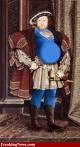
Henry 8th was a poster boy for intrigue and scandal in the 16th century tabloids. His court briefings would have made front page news and hogged the 24 hour news cycle! And so its odd to hear people saying that this fellow was founder of the Anglican Church or that the Anglican Church was the result of a divorce.

“Wasn’t Henry 8th founder of the Anglican Church? Bolivian history textbooks under Roman influence resoundingly reply – Yes! The irony is that some low evangelicals would probably agree to this soap opera view of church history. Some might not even bother with the issue. This post does not arise out of any desire to defend the Anglican Church but rather reflects my interest in European Church history. So if you like to know something about Anglican origins…read on…

The gospel according to some historians was brought to the British Isles by an unknown cast of merchants, soldiers, tradesmen. The Anglican Church traces its beginnings to the 3rd century in Britain; Bishops from the British Isles were present at the council of Arles; an indigenous sort British Christianity (call it Celtic if you wish) existed prior to the coming of the first Roman missionaries in the 6th century.

Pope Gregory sent Augustine in the 6th century to the British Isles as a missionary to help in the evangelisation of Britain. Like it or not, the Roman church was a later accretion within British Christianity. The Roman and British faith traditions went through a period of interpenetration with Rome being the dominant partner. This interpenetration however did not dissolve Rome and Britain into one religious and political entity. Regional, cultural and religious differences in Europe coupled with medieval political intrigue provided the setting for a topsy - turvy relationship between Rome and the British ruling elite throughout the centuries. Everything came to a head in the 16 the century when Pope Clement did not allow Henry to divorce his wife and remarry; Henry was desperate for a male successor to the throne. The swirling forces of the Reformation and regional nationalistic loyalties gave Henry the necessary groundswell to cut links with Rome and assert a popular sort of Protestant Christianity in Britain. Rome however had its supporters in the royal court as well as in the streets. Henry’s actions triggered conflicts in the country and Britain was characterised by convulsions during the reigns of Henry’s successors - Edward and Mary. Queen Elizabeth, during her 40 year reign, stabilized the country, and provided the structures necessary to keep the Church of England intact. The rest is history…

So was the Anglican Church the result of a divorce? No it was not and here’s why.

Henry 8th’s divorce did not herald the beginning of the Anglican Church but was rather one of the many events in the 16th century which indirectly set the stage for the renewal of the British church. The tectonic religous plates were already shifting before the divorce: educated laity were reading the Bible, Luther's ideas were taking root; slowly but surely superstitions were being questioned. History suggests that the Anglican church was not a renegade Roman Church that Henry managed to make Protestant through his divorce. Henry, the astute politician that he was, rode the Reformation tiger, assumed ecclesiastical powers and freed himself from Roman dominance.

So who was responsible for the origins of the Anglican Church? It’s great public relations to have a Luther, Calvin, St. Francis or a Cho Yong Gi as founder of your movement or Church. Anglicans however will have to settle for a cast of unknown evangelists. The Anglican Church, not unlike the New Testament gentile churches in Rome and Antioch, traces its beginnings in the 3rd century through the labours of dynamic lay people – soldiers, businessmen and merchants. And wait a minute - isn’t that Christ's Church in action!!